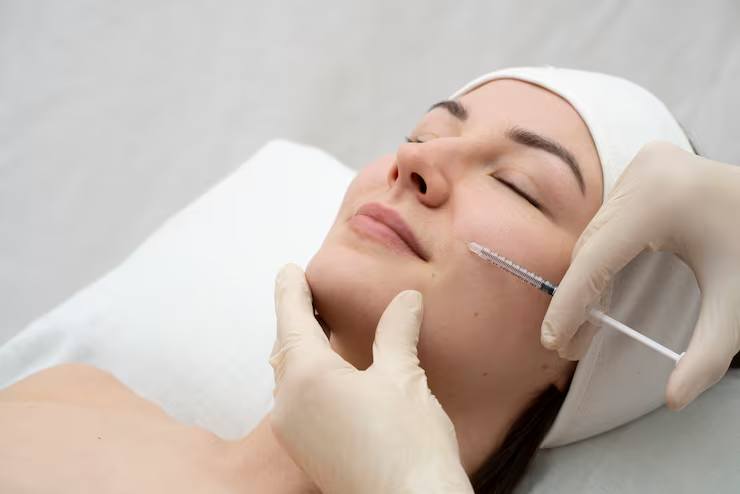
When people hear the term “hydration mapping,” they think it’s some super-complicated skin care procedure in a clinic brochure, not a legitimate appointment. However, in reality, it’s not as difficult as it sounds. It’s essentially a method of determining where the skin is truly dehydrated, rather than slapping on a product and hoping for the best.
The problem is, skin doesn’t dry out evenly. Some areas remain relatively even; others begin to feel dull, fine lines, or a slight tightening after cleaning. The irregularity is the very thing that hydration mapping aims to harness in treatments, such as skin boosters near me searches.
Most people do not notice skin changes until they are visible on the skin. The pattern is typically much more subtle and begins early, with subtle changes in texture and elasticity that are easily overlooked throughout the day.
Understanding of how to implement Hydration Mapping in practice.
In this method, the entire face is not treated as a flat surface in the clinic. Rather, the skin is mentally segmented into zones according to its response to dehydration stress. There are frequently varying needs in the cheeks, forehead, under-eyes, and jawline.
This is where results begin to feel more natural; it’s subtle. Instead of saturating the entire surface, hydration is enhanced in the area where it is being lost the quickest.
That’s also where experience becomes more important than products.
Why Skin Boosters Work Better With Targeted Hydration
Skin boosters are not just about adding moisture. They are about improving how the skin holds hydration over time. When they are used without any mapping or assessment, results can still be good, but they are often less consistent.
With a more targeted approach, smaller adjustments can create a more balanced overall effect. Some areas may need slightly more support, while others only need maintenance.
That difference is not always obvious immediately after treatment. It becomes clearer a few weeks later when the skin starts settling into its new baseline.
This is also the stage where clinics like Define Clinic often reassess how the skin is responding before planning follow-up sessions.
What People Usually Notice After Treatment
Most clients do not walk out talking about hydration zones or mapping techniques. They usually notice simpler things.
The skin feels less tight. Makeup sits more evenly. There is a softer, more rested look even without a major visible change.
It is rarely a dramatic transformation overnight. It is more of a gradual correction in the skin’s daily behaviour.
And that is often what people were actually trying to fix in the first place.
Why Technique Matters More Than Trend
Hydration mapping is not new, but it has become more talked about as skin booster treatments have grown in popularity. The technique itself is less about trend and more about observation.
Skin rarely needs more product. It usually needs better placement.
That small shift in thinking is often what separates average results from long-lasting ones.
Looking Beyond the First Appointment
Most skincare treatments look impressive immediately after the session. Skin boosters are no different. The real difference shows up later, when hydration levels either hold steady or start slipping back unevenly.
Understanding how the skin behaves over time is what makes the approach more effective than simply repeating the same treatment pattern.
Define Clinic works with this kind of assessment-led approach, in which hydration mapping and skin booster treatments are adjusted based on how each individual’s skin responds, rather than following a fixed routine.
Featured Image Source: https://img.freepik.com/free-photo/close-up-woman-lip-filler-procedure_23-2149315549.jpg?semt=ais_hybrid&w=740&q=80