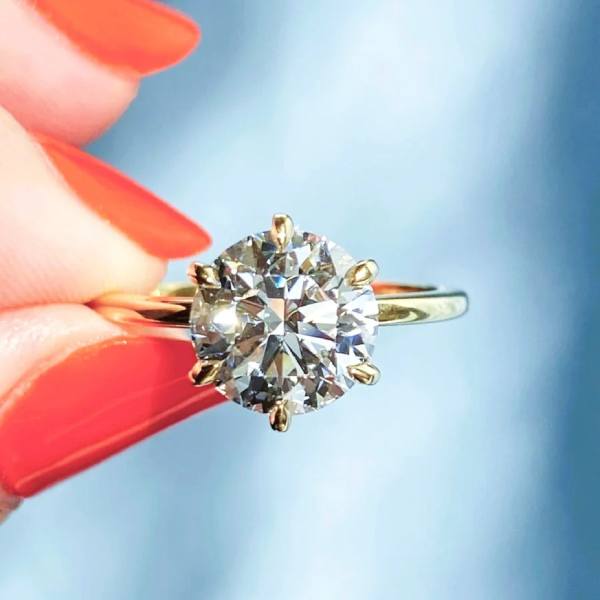
Somewhere in a drawer or a bank box sits a diamond that outlived its first owner. The setting looks dated, the band fits nobody in the family, and still no one can imagine selling it. Stones like these become the starting point for some of the most meaningful custom engagement rings in Dallas. A ring built around an inherited diamond carries something no display case can match: proof that a new marriage joins a much longer story.
Resetting an heirloom feels risky, though, and many people hesitate for years. What if the stone chips during removal? What if a jeweler swaps it for a lesser one? What if grandma would have hated the new design? Questions like these stop more resets than money ever does. Seeing how custom engagement rings in Dallas actually take shape around a family stone removes most of that fear.
The process below reflects how a private jeweler such as Shapiro Diamonds Dallas Engagement Rings handles inherited diamonds, with the same two owners guiding the stone from old mount to new. Chain stores rarely offer this path, since their business depends on selling new inventory. A reset calls for design skill rather than a sales pitch.
Why Family Diamonds Make Beautiful Custom Engagement Rings in Dallas
Start with the money, since it surprises people. The center stone usually costs more than everything else on a ring combined. An inherited diamond removes that expense entirely and frees the full budget for the setting, the metal, and the details. Couples who expected a modest ring suddenly find room for pave accents or a heavier platinum band.
Then there is the part money cannot touch. She wears the same stone her grandmother wore through fifty years of anniversaries. Older diamonds also carry cuts that modern cases rarely stock, and those older proportions give a ring character that mass production cannot copy.
The Quiet Fear of Handing Over an Heirloom Diamond
Nobody says it out loud at the counter, yet almost everyone thinks it. Will the same stone come back? The worry is fair, and the answer lies in how you choose where to go. Hand a family diamond only to a jeweler where the person receiving it is the person returning it, not a rotating staff behind a service window.
There is a practical safeguard too. Every diamond holds a pattern of tiny internal marks, and those inclusions work like a fingerprint. Sit with the jeweler, view the stone under magnification together, and note two or three marks before it leaves your hands. Check the same marks at pickup. Ten minutes of attention settles years of doubt.
How the Heirloom Reset Process Works Step by Step
Here is the path a family stone follows at a custom studio:
- The first meeting covers the stone, the story, and the style of the person who will wear it.
- Kendra Shapiro sketches the new design by hand before anything else happens.
- A 3D CAD rendering shows the ring from every angle, and nothing moves forward until you approve it.
- A wax model is available to try on, so the proportions prove themselves on a real hand.
- Dallas bench jewelers then free the diamond from its old mount, cast the new ring, and set the stone by hand.
“An inherited stone tells the design where to start,” said Kendra Shapiro, master jewelry designer and co-owner of Shapiro Diamonds. “Some clients want the new ring to echo the original. Others want something their grandmother would never expect. Both choices honor her.”
Expect about two to four weeks from design approval to finished ring, which matters if a proposal date is already circled.
Choosing a Setting and Metal Around an Inherited Stone
Older stones ask for a little extra thought here. Decades of wear can leave a girdle or a corner that deserves protection, so prong count and prong placement become design decisions, not afterthoughts. A six-prong solitaire or a cathedral setting shelters a vintage stone while lifting it into the light.
Metal choice changes the diamond itself, at least to the eye. Many older cuts show a warmth that 18K yellow gold flatters beautifully, while platinum and 18K white gold push a whiter, cooler look. Hold the loose stone against both before deciding. The right answer usually announces itself in seconds.
When Keeping the Original Ring Makes More Sense
Honesty belongs in this conversation, and a good jeweler will offer it. Sometimes the memory lives in the whole ring, not just the stone. If the original setting stays comfortable, structurally sound, and loved exactly as it is, nothing requires a reset. Wearing it untouched is a perfectly good choice.
Other families land in the middle. The diamond moves into a new engagement ring, and the emptied band stays in the family as a keepsake. There is no single correct answer, only the one that feels right when you picture the ring twenty years from now.
Giving the Stone Its Next Seventy Years
A diamond in a drawer honors nobody. It sits in the dark while the person it should belong to shops for a stranger’s stone instead. That is the quiet loss in every postponed reset, and it costs nothing to reverse.
Bring the ring to a private appointment, even if the family has not fully decided. Look at it under magnification, hear what a designer sees in it, and ask what it could become. The stone already proved it can carry a marriage. Give it the chance to carry the next one.