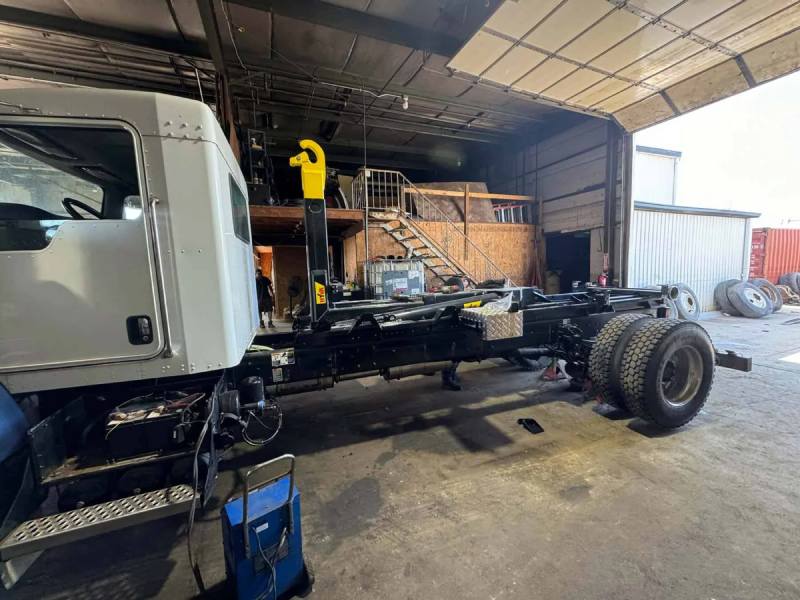
You turn in your keys, and the bay door rolls all the way down as the truck disappears from your sight. What goes on in the next hour or so will determine whether you get a proper fix or just another sticking plaster: one that falls off come Friday. Most owners never see that part of the movie. But this is a plain view of what happens when you step out.
Well, good semi truck repair starts before a wrench is even picked up. A meticulous semi-truck repair store will take this first slot partly just to appear and listen. Of course, the fault you mentioned matters. The truck often narrates a larger tale once it makes its home on the ground. That is how the skipped step winds up in the bin.
What is the difference between a quality semi truck repair shop and a quick fix? Order. As a real semi truck repair goes, it runs in order, and when you cut it short, it will cost you later on. Look first. Test second. Fix third. Confirm last. That pattern may sound obvious, yet many shops instead just start haphazardly exchanging components and crossing their fingers.
The First Twenty Minutes
There is nothing too dramatic that happens at the beginning. The technician runs through the truck with you, listens to your complaint, and records what the engine does and when it does it. Then the scanner comes out. Modern diesels are electronics-heavy, and the U.S. Bureau of Labor Statistics points out that shops have a trend toward relying on computer diagnostics to identify problems and analyze engine data.
The intake usually covers:
- The fault you observed and the way it is beyond all doubt is
- Stored trouble codes and warning lights
- If the truck has been in, it should show service history.
- That saved list will save you hours later.
The Truck, Not Just The Code
This is the portion most people miss, a trouble code points to a system and not necessarily the cause. The derate code could be from a bad sensor, or something upstream reduced airflow and tripped the sensor. Treating the code as the solution leads right back into the bay.
An experienced technician tests; they do not guess. Fuel delivery under load. Boost pressure off the turbo. Circulation of hot coolant occurs when the engine has warmed. The idea is to observe the point that broke among the parts, not the part that was looking guilty. It is the difference between one visit and three that you are patient for.
The Conversation Before The Repair
This is the step that owners really care about, though they would never admit to it. But before they start working, you should listen to what the shop found, what it recommends, and how much it will cost to repair. No mystery. No sneaky line item tacked onto the deck.
A good shop gives you the plan and the price and waits for a yes. This is where per-job pricing helps; instead of increasing with the clock, it stays put. You compare pros and cons against your calendar and your wallet, and you make a decision. The truck is yours. The choice should be too.
Inside The Actual Fix
Now the wrenches come out. Anyone assuming fewer systems than the work spans should be prepared to budge. Repair Diesel Engines for Cummins, Power Stroke, Duramax, CAT, Detroit Diesel, and International. For clean-running power that keeps codes at bay, we have parts for your fuel, turbo, and emissions. Hydraulics, wet kits, framework, and dump bodies for when fabrication is needed, along with the repair.
You are now more sensitive to the exhaust side than ever. BLS says diesel techs also maintain emissions and exhaust systems to keep trucks in compliance with pollution regulations. A clogged filter or a fatigued EGR component does more than just trip a code. It can also relegate the engine into a derate and park a loaded truck on the shoulder. Doing it correctly the second time guarantees that we avoid this twice.
The Test Nobody Should Skip
Inserting the part does not complete a repair. Once the truck shows the fault is gone, it is a DONE deal. The engine will be run, the readings rechecked, and a brief road test will be done-still before it ever goes near the lot again.
Why bother? Since we have a solution that worked in the bay, but can easily break under real load. Weight detection tests pull out the remaining issues that leftover idle running obscures. You want to find those at the shop, not you halfway up a grade with freight behind you.
Why The Order Matters To You
At a distance, the pattern is simplicity itself. Look, test, explain, fix, confirm. Anything left out comes back to haunt your pocket and your schedule. Next week, a patched truck leaves you marooned. A truck properly and orderly fixed is an income generator that turns on the road instead of sitting there doing nothing.
About five minutes from Omaha and Council Bluffs in Crescent, Iowa, they have a semi-truck repair shop called MSR Manufacturing. Fixing semi trucks, dump trucks, and commercial vehicles of any class with honest diagnostics, explanations as to why/what/how the service is required, + per-job quote you approve before we start work. The store is open Monday–Friday, 7:00 AM to 4:00 PM, and Saturday by appointment.
Got a truck down? Get it scheduled with a call or text. Generally, the longer a tech takes to look behind the noise, the bigger the repair.
Featured Image Source: https://msrmanufacturing.com/wp-content/uploads/yootheme/cache/5c/5c84dfc5.webp