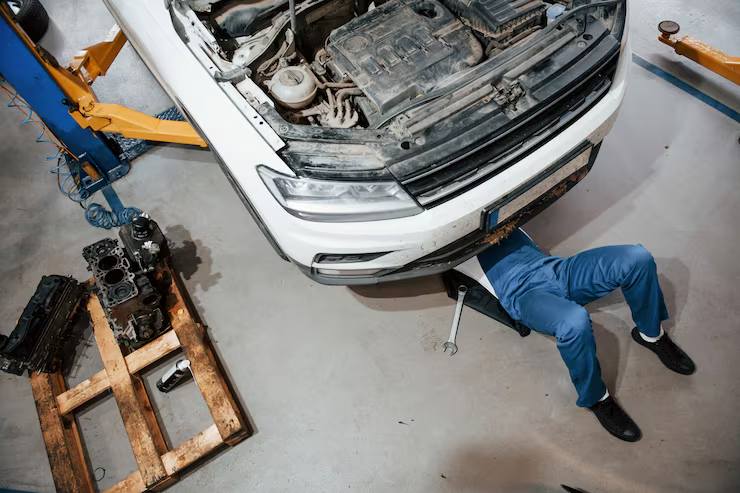
There was a time when most people judged collision damage by what they could actually see. A dented bumper, a crumpled fender, maybe a hood that no longer closed properly. If the paint looked good again and the panels lined up well enough, the repair was considered finished. The problem is that modern vehicles are built very differently now. A car can look surprisingly normal from the outside while hiding structural damage beneath the surface that affects everything from handling to safety systems.
That is a big reason why auto collision repair has become far more diagnostic than cosmetic over the last several years. Repair shops are no longer just replacing damaged parts and repainting panels. They are measuring, scanning, and verifying how the vehicle’s structure responds after an impact. What looks like a relatively minor accident on the surface can sometimes shift portions of the frame by amounts small enough to escape the naked eye but significant enough to affect how the vehicle drives afterward.
The same thing applies to auto body repair, honestly. Most people think about body work as fixing dents, scratches, and damaged panels, but the visible damage is often only part of the story. Modern repair procedures usually begin by understanding what happened beneath those panels. If the vehicle’s structural components are even slightly out of specification, replacing exterior parts alone does not really solve the problem.
Small Misalignments Can Create Bigger Problems
One of the more surprising things about structural damage is how little movement it sometimes takes to create noticeable issues. Vehicle manufacturers design frames and unibody structures with extremely precise measurements. Even minor shifts can affect wheel alignment, suspension geometry, steering response, and overall stability.
That is why repair facilities use computerized measuring systems during inspections. Instead of relying solely on visual checks, technicians compare the vehicle’s measurements against factory specifications. The goal is not simply to make the car look straight again. The goal is to confirm that critical structural points are in exactly the positions they were designed to be before the accident.
For drivers, the symptoms are not always obvious right away. Uneven tire wear, steering that feels slightly off-center, or a vehicle that does not track properly on the highway can sometimes trace back to structural issues that were never fully corrected.
Modern Vehicles Depend On Structural Accuracy
Automobiles today have much more technology than they did a decade ago. The vehicle’s structure, which supports features such as safety systems, sensors, cameras, and driver-assistance capabilities, must be properly in place.
For instance, a front-end crash could affect areas where sensors for lane departure warning, adaptive cruise control, or automatic emergency braking are mounted. Incorrect Structural Positioning of Replacement Parts. Even when hypothecated elements are accurately fitted, misaligned structural positioning can inhibit how those systems function.
That is, in part, why structural verification has become such a critical step in the repair process. Now it is not only about restoring physical damage. Shops should also ensure that the vehicle technology functions as the engineers intended.
Measuring Comes Before Straightening
A common misconception is that technicians immediately start pulling damaged structures back into place as soon as the vehicle arrives.
In reality, the measuring process often comes first.
Technicians typically identify where movement occurred, determine how far components shifted, and compare those findings against manufacturer specifications before any corrections begin. Without those baseline measurements, it becomes much harder to know whether the structure has truly been restored afterward.
The process can feel surprisingly methodical. Measure first. Correct the structure. Measure again. Verify everything one more time.
That extra verification may seem repetitive, but it helps eliminate guesswork from repairs involving critical structural areas.
Why Post-Repair Checks Matter Just As Much
Interestingly, some of the most important structural inspections happen after repairs are completed rather than before.
Once replacement parts are installed and structural corrections are finished, technicians often perform additional measurements to confirm everything remains within factory tolerances. Suspension components, steering systems, and safety-related equipment may also require further evaluation depending on the severity of the impact.
That final verification stage is what helps distinguish a vehicle that simply looks repaired from one that has actually been properly restored. Most drivers will never see those measurements themselves, but they benefit from them every time they get behind the wheel.
Structural alignment checks are among the parts of collision repair that rarely receive much attention because they happen behind the scenes. Yet they play a huge role in determining how a vehicle performs long after the visible damage has disappeared. Shops like Relux Collision in Sacramento have built their repair process around that kind of precision, combining more than 30 years of experience with advanced diagnostic scanning, ADAS calibration, and manufacturer-conscious repair procedures. Which, honestly, is exactly the kind of approach modern vehicles require once an accident affects more than just the visible panels.
Featured Image Source: https://img.freepik.com/free-photo/artificial-lighting-employee-blue-colored-uniform-works-automobile-salon_146671-16618.jpg?semt=ais_hybrid&w=740&q=80