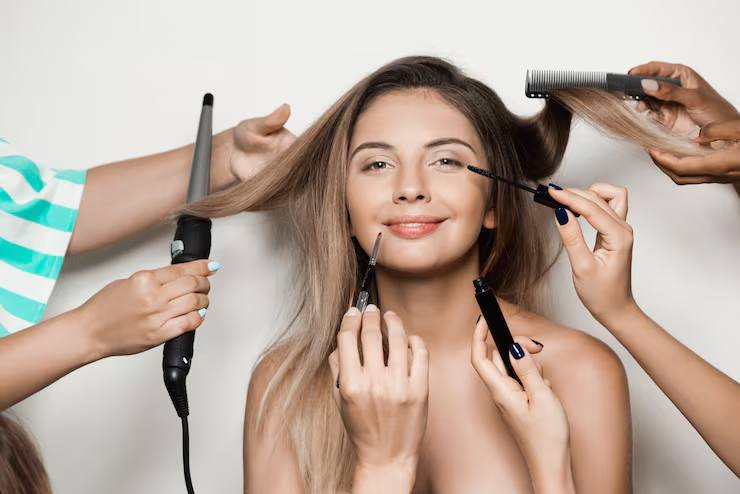
There was a time when most salon appointments followed a pretty predictable formula. Trim the ends, maybe add some layers, blow it out at the end, and call it a day. Face framing technically existed, but it usually meant two shorter pieces cut around the front, almost as an afterthought. Once social media and high-definition cameras became part of everyday life, though, people began noticing how much those front sections actually change the overall shape of a haircut.
A modern best hair salon approaches face framing much differently now. The front of the haircut is treated almost like its own design element rather than just the place where the layers start. Placement around the cheekbones, jawline, eyes, and even the neck length all start to factor into the decisions. Some clients need softness around sharper features. Others want a structure added to make the face feel rounder. A good stylist usually makes those calls before the scissors even come out.
The interesting part is how much this same thinking has spread across the entire luxury salon experience. Consultations have become more detailed because stylists are paying attention to movement, styling habits, color placement, and how hair behaves once someone leaves the chair and returns to real life. A cut that photographs beautifully but falls apart after one wash at home, honestly, does not mean much to most people anymore.
Why Face Framing Matters So Much
The eye naturally gets pulled toward the front pieces of a haircut first. That is just how people process faces visually. The front sections are what show up in mirrors, photos, video calls, and conversations. Even subtle adjustments around the front can completely change how balanced the haircut feels overall.
Curtain bangs are probably one of the clearest examples of this. They soften the forehead area without committing someone to a full, heavy bang. Longer face-framing layers can slim fuller cheeks or add movement around the jawline. Shorter textured pieces around the eyes create more lift and energy throughout the haircut. None of these techniques is especially complicated on paper, but placement is what separates flattering from distracting.
Color Placement Changes Everything, Too
Face framing is not only about cutting anymore. Color plays a huge role in it now, too. Brightening specific sections around the face can make skin look warmer, eyes appear brighter, and the entire haircut feel more dimensional without needing a dramatic full-color service.
This is part of why lived-in blonding and dimensional brunettes became so popular over the last several years. Instead of one flat color from roots to ends, stylists place lighter pieces strategically around the face where light naturally hits first. When done correctly, the grow-out stays softer, too, which is honestly one of the main reasons clients keep asking for it.
The process becomes even more technical with curly or textured hair. Curl patterns shrink differently once dry, so face-framing sections have to account for movement and bounce rather than length alone. Cutting curls wet, without accounting for shrinkage, is usually where things start to go sideways.
The Consultation Usually Matters More Than People Think
A lot of clients walk into appointments saying they want layers when what they actually mean is movement around the face. Those are not necessarily the same thing. Some people bring reference photos where the styling is doing half the work, while others choose a haircut that works completely differently with their own hair density or texture.
This is why stronger consultations matter so much in modern salons. Stylists are usually trying to figure out how much maintenance someone realistically wants, whether they heat-style daily, where their natural part falls, and how often they are actually willing to come back for maintenance trims. Face framing that works beautifully for someone styling their hair every morning may not work nearly as well for someone who air-dries and leaves the house in 10 minutes.
Extensions and Face Framing
Extensions add another layer to the conversation, too. One thing people often do not realize is that extensions have to blend naturally around the face first, before the added length in the back even matters. If the front pieces are too blunt or disconnected, the entire install immediately starts to look obvious.
Hand-tied extensions especially rely heavily on soft blending around the hairline and face frame. The goal is usually for the added hair to blend into the natural haircut rather than creating the heavy shelf effect that some people associate with older extension methods. The difference becomes really obvious once the hair gets pulled into a ponytail or tucked behind the ears.
Why the Salon Environment Matters Too
Interestingly, the actual salon environment changes the experience more than people expect. Open-floor salons tend to feel energetic and collaborative, while private suites give clients a quieter setting where consultations feel more personal. Some people genuinely relax more in one setting than the other, and relaxed clients usually communicate better about what they actually want.
That balance is part of what salons like AltaRd Salon in Fairborn have leaned into with their hybrid setup. Clients can come in for dimensional color, extension work, curl services, facials, or even fine-line tattoos without feeling like the space is trying too hard to feel exclusive or intimidating. The atmosphere stays elevated without crossing into uncomfortable territory, which, honestly, is harder to pull off than it sounds.
Face framing is one of those details people may not always know how to describe out loud, but they notice it instantly once it is done correctly. The haircut feels lighter. The color looks brighter. Features appear more balanced without anyone necessarily being able to explain why. Booking with a stylist who understands how all those pieces connect is usually what turns a decent salon appointment into one people keep coming back for.
Featured Image Source: https://img.freepik.com/free-photo/hands-doing-make-up-hairstyle-young-beautiful-woman_176420-886.jpg?semt=ais_hybrid&w=740&q=80